







Gulfa: The Future of Poultry Investment in Saudi Arabia Under Vision 2030
A Strategic Industry Connecting Food Security, Investment Opportunities, and Technological Advancement
Introduction: Poultry Farming Is No Longer Just an Agricultural Activity
Saudi Arabia’s poultry industry is undergoing a strategic transformation that extends beyond the traditional concept of raising birds and producing meat and eggs. It has become an important component of the country’s food security framework, economic development, and industrial localization efforts.
Under Saudi Vision 2030, increasing domestic production, improving resource efficiency, and developing industries that support the agricultural sector have become key priorities in building a more diversified and sustainable economy.
Today, successful poultry investment requires more than acquiring land, constructing poultry houses, and supplying birds and feed. It demands the integration of investment planning, engineering design, modern technology, and operational management.
A successful poultry farm is no longer simply a production facility. It is an integrated investment system that must be designed to achieve efficiency, sustainability, and long-term competitiveness.
- The Poultry Industry and Saudi Vision 2030
Saudi Arabia places significant emphasis on developing its domestic food production system to strengthen food security, reduce dependence on imports, and increase private-sector participation in the national economy.
The poultry sector has experienced substantial development in investment, production capacity, and the adoption of modern technologies.
According to figures attributed to Saudi Arabia’s Ministry of Environment, Water and Agriculture, broiler chicken production reached approximately 1.4 million metric tons in 2026, alongside the production of more than 9 billion eggs. The reported figures also indicate self-sufficiency levels of approximately 80% in poultry meat and 100% in table eggs, based on data described as having been announced by the Ministry in October 2026.
These indicators reflect the scale of the sector’s development and highlight the importance of investments aimed at expanding production capacity and improving operational efficiency.
Growth opportunities extend beyond poultry farming itself. They also include equipment manufacturing, poultry house construction, environmental control systems, engineering services, maintenance, and spare parts.
- Why Is Poultry Investment a Strategic Opportunity?
The poultry industry benefits from its direct connection to demand for essential food products.
Investment opportunities span several important segments.

2.1 Broiler Production
Broiler farming operates through recurring production cycles and requires precise management of feeding, ventilation, environmental conditions, and biosecurity.
2.2 Commercial Egg Production
Egg production represents a relatively continuous production activity that depends on efficient housing, feeding, drinking, egg collection, and manure management systems.
2.3 Breeder Farms and Hatcheries
Breeder operations and hatcheries play a fundamental role in the poultry supply chain by providing the chicks required for commercial production.
2.4 Supporting Industries and Services
These include poultry equipment manufacturing, steel structure construction, ventilation, cooling and heating systems, control panels, and maintenance services.
Despite these opportunities, poultry investment is not without risk.
Profitability is influenced by feed and energy prices, flock health, financing costs, selling prices, and management efficiency.
Therefore, every project should be evaluated through an independent feasibility study rather than assuming that overall industry growth guarantees profitability.
- Modern Technology Has Become an Investment Necessity
One of the most significant transformations in poultry production is the gradual transition from conventional operating methods toward more automated and environmentally controlled systems.
These technologies include:
Ventilation Systems: Designed to provide appropriate airflow and help regulate temperature, humidity, and air quality.
Cooling Systems: Used to reduce the impact of high ambient temperatures, particularly in hot climates.
Heating Systems: Essential for maintaining suitable thermal conditions during the early stages of poultry production.
Feeding and Drinking Systems: Designed to distribute feed and water efficiently while minimizing unnecessary waste.
Automatic Control Systems: Used to monitor environmental conditions and operate equipment according to production requirements.
These technologies can support more stable operating conditions and improve resource management.
However, purchasing advanced equipment alone does not guarantee good production results.
The real value comes from selecting suitable equipment, integrating systems through proper engineering design, ensuring professional installation and calibration, and implementing effective maintenance procedures.
- Engineering Design: The Foundation of Investment Protection
A common mistake in poultry investment is treating poultry house construction as a separate activity from equipment selection.
In reality, the structural design of a poultry house is directly connected to its ventilation, cooling, heating, feeding, and drinking systems.
For example, house length, width, height, and stocking density influence ventilation requirements and equipment distribution.
Similarly, thermal insulation and construction quality affect heat loads and operating costs.
Poor coordination between structural, mechanical, and electrical engineering can result in expensive modifications during construction or operational problems after production begins.
Investors therefore need an integrated engineering approach from the earliest stages of project development.
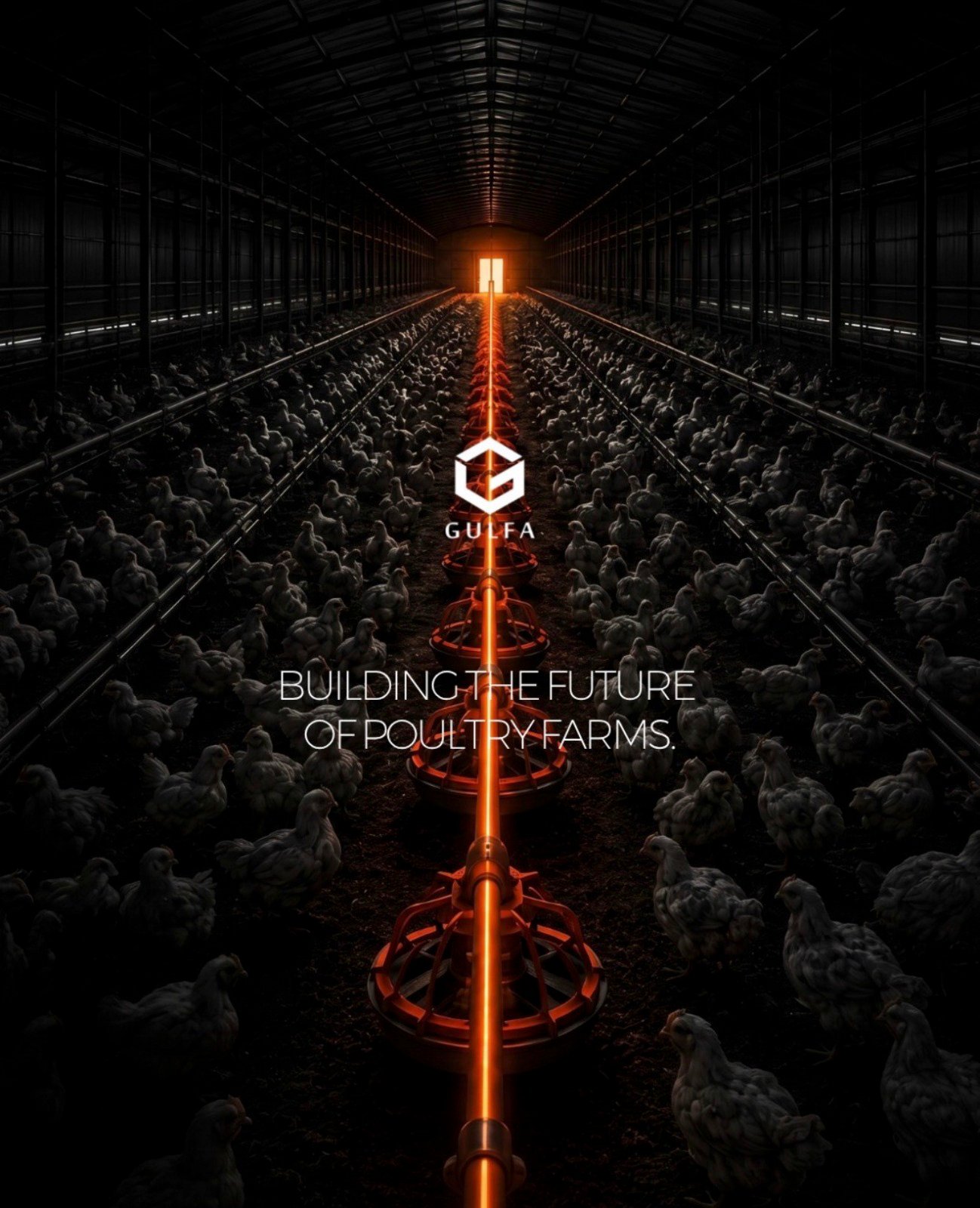
Every sound engineering decision made during the planning stage can help prevent additional costs during construction and operation.
- Local Manufacturing and Its Role in Industry Development
Localization within the poultry industry is not limited to increasing domestic meat and egg production.
It also includes developing the manufacturing industries and technical services that support poultry operations.
Local poultry equipment manufacturing can contribute to stronger supply chains and reduce dependence on certain imported components.
It may also provide investors with practical advantages, including easier technical communication with manufacturers, opportunities for product customization, and improved access to spare parts and technical services.
Nevertheless, comparisons between locally manufactured and imported equipment should be based on actual quality, technical specifications, verified performance, and total cost of ownership—not country of origin alone.
- GULFA’s Role in the Poultry Investment Ecosystem
As the poultry industry continues to evolve, companies that combine technical expertise, operational knowledge, and manufacturing capabilities play an increasingly important role.
With more than 30 years of experience in the poultry industry, GULFA Poultry Equipment is involved in manufacturing poultry farm equipment and supporting project development.
GULFA’s areas of activity include steel structures, feeding and drinking systems, ventilation fans, environmental control equipment, and other components used in poultry farming facilities.
The company’s philosophy is built around a fundamental principle:
“We treat every customer as a partner in success, not merely as a buyer of equipment.”
The value of this partnership begins with understanding the nature of each project and the investor’s requirements.
It continues through the selection of appropriate engineering solutions and equipment, as well as coordination during project execution and installation.
Technical support, maintenance services, and spare-parts availability are also important elements in building long-term customer relationships.
The objective is to help investors make informed technical and economic decisions that support project efficiency and operational continuity.
- The Future of Poultry Investment Begins with Proper Planning
The future of Saudi Arabia’s poultry industry depends not only on increasing the number of projects but also on their ability to achieve stable production at competitive costs while meeting quality, biosecurity, and sustainability requirements.
Projects that combine thorough investment analysis, integrated engineering design, suitable equipment, and effective operational management are better positioned to achieve their objectives.
Investors should therefore begin by asking several essential questions:
What is the appropriate production capacity for the project?
How much capital investment is required?
How should the site, engineering design, and equipment be selected?
What are the expected operating costs?
How will maintenance and operational risks be managed after production begins?
Answering these questions is the first step toward building a project capable of sustainable operation and future growth.
Conclusion: From a National Vision to a Successful Investment
Saudi Vision 2030 provides an important framework for developing the poultry industry and strengthening its contribution to the national economy and food security.
However, transforming these opportunities into successful projects requires more than financial resources.
It requires knowledge, careful planning, engineering expertise, modern technology, and long-term professional partnerships.
At GULFA, we believe that the success of a poultry project begins before the first piece of equipment is installed and continues long after the final system becomes operational.
For more info, visit www.gulfa.com.sa


