





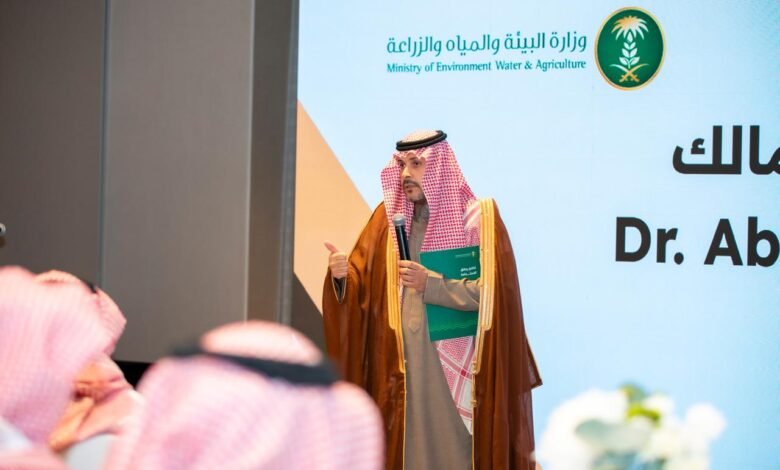
Accelerating Research Innovations into Technologies and Investments That Support Food Security
The Ministry of Environment, Water and Agriculture has emphasized the importance of strengthening integration between scientific research and investment, while developing financing mechanisms and partnerships to transform research and innovation outcomes into practical technologies and promising businesses. These efforts aim to enhance food security and ensure the sustainable use of natural resources.
This was highlighted by Dr. Abdulaziz Al-Malik, Deputy Minister for Research and Innovation, on the occasion of the launch of the “Sequencive” Investment Fund, which focuses on commercializing innovations across several vital sectors, including environment and agriculture. The fund represents an important step towards linking scientific research with investment opportunities and directing capital towards priority sectors, particularly the food sector.
Dr. Al-Malik explained that many promising technologies demonstrate scientific viability but fail to reach the market due to a lack of appropriate funding at the right stage, the absence of partners capable of turning them into commercial ventures, or the lack of organizations willing to adopt them. He noted that the Ministry has developed a strategic research and innovation plan to direct efforts towards solutions with the greatest potential impact and the strongest prospects for practical application and scalability.
He added that, through its coordinating and enabling role, the Ministry is working with financing and investment entities to facilitate innovators’ access to appropriate funding at every stage, from research and development to practical implementation and commercial expansion. This involves strengthening integration between public, private, and non-profit funding sources, aligning them with sectoral priorities, and diversifying financing instruments, ranging from grants and loans to equity investment. These efforts are supported by partnerships that help distribute risks and ensure continued support for promising solutions.
Dr. Al-Malik stressed that funding alone cannot guarantee the success of innovation unless it is accompanied by genuine market demand and opportunities for early adoption by beneficiary organizations and major companies. He noted that the success of the innovation ecosystem should be measured by the technologies that are adopted, the companies that grow, and the investments attracted.
He expressed hope that the fund would help open new avenues for cooperation between research institutions, investors, and beneficiary sectors.